
eRating is the electronic pricing of F&I protection products, such as vehicle service contracts and GAP, for one specific vehicle and deal. The F&I menu asks each product provider for current rates and eligibility, then shows the results on the menu, so the finance manager doesn’t re-key the deal into separate provider portals.
What does eRating mean in F&I?
Every protection product needs a price for the deal in front of you. A service contract’s cost depends on the vehicle’s year, make, model, mileage and in-service date, plus the term, coverage level and deductible. GAP depends on how the deal is structured. Ancillary products have their own rules. Until a product is rated, the finance manager doesn’t know what it costs or whether the vehicle qualifies.
eRating handles that step electronically. The menu sends the vehicle and deal details to the provider’s rating system and gets back the eligible products, coverage options and rates, usually in seconds. Those results go straight into the menu the customer sees.
eRating has a partner step called eContracting. That’s where the products the customer picks become contracts and go to the provider electronically. People often say “eRating and eContracting” in one breath. Both are different from lender eContracting, which sends the retail installment contract to a bank. The table further down shows the differences.
How are F&I products rated without eRating?
Many dealerships still rate at least some products by hand. It usually goes like this:
- The finance manager logs into one or more provider portals.
- They type in the VIN, mileage, sale date and deal details for each product.
- They copy the returned rates into a paper or spreadsheet menu, or quote from rate cards.
- After the customer chooses, they enter the same information again to build each contract.
Every re-key is a chance to mistype a mileage, pick a term the vehicle no longer qualifies for, or quote a price that has since changed. Those errors tend to surface later, as a contract the provider sends back.
How does eRating work, step by step?
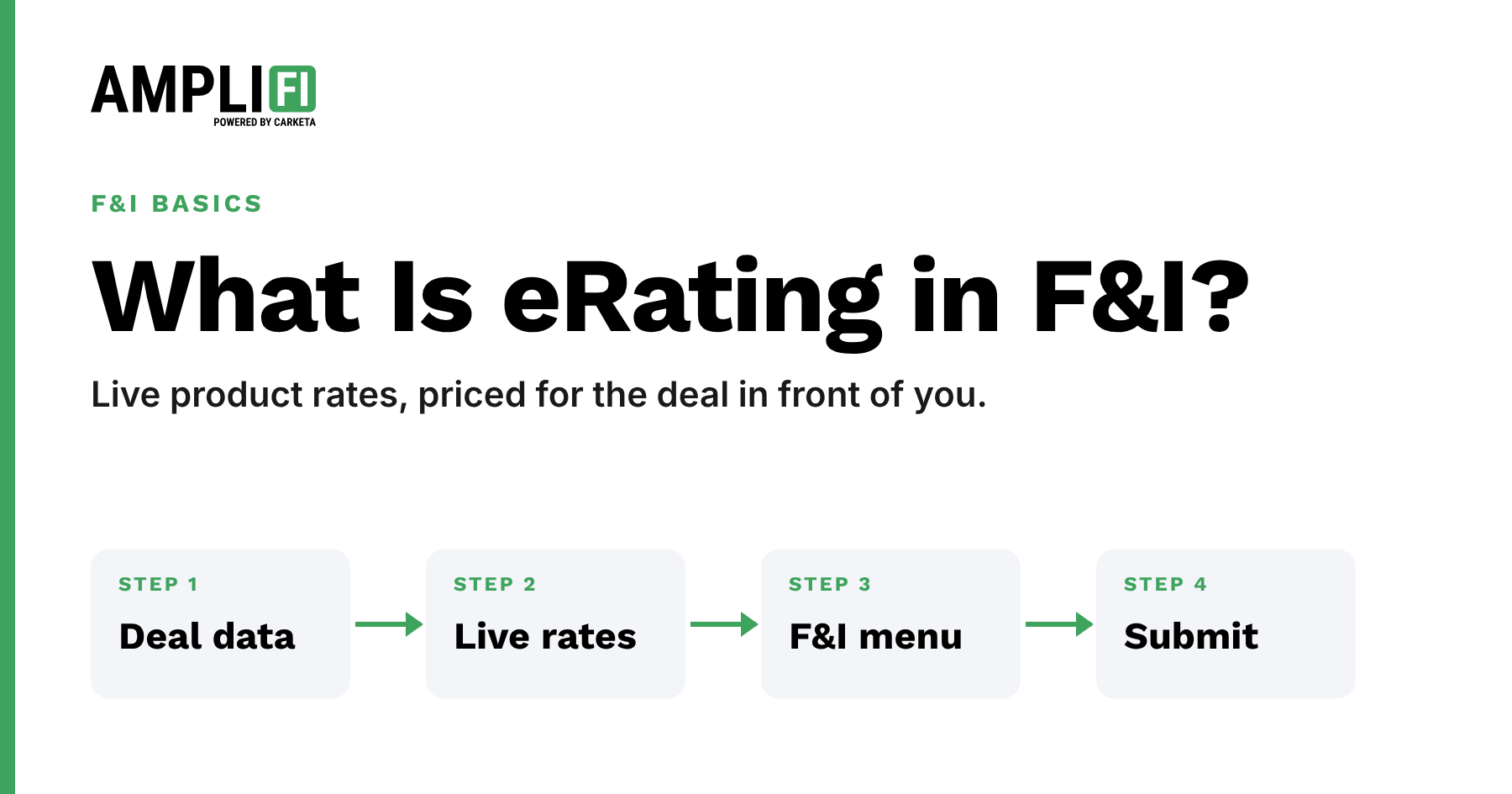
The exact flow depends on the menu platform and the providers connected to it. The general sequence looks like this.
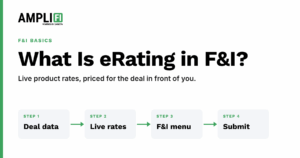
1. Deal and vehicle data come into the menu
The VIN, mileage, sale price, term and customer state come from the deal. The best setups pull them from the dealership’s DMS so nobody types them twice.
2. The menu requests rates from each provider
The menu sends a rating request for every product the dealership offers through a connected provider.
3. Eligible products and live rates come back
The provider returns which coverages the vehicle qualifies for, with terms, deductibles and cost. Products the vehicle doesn’t qualify for can be filtered out before the customer sees them.
4. The finance manager presents the menu
Pricing logic, meaning the dealer’s markup rules and package structure, turns provider cost into the retail options on the menu. The customer sees current, consistent options instead of numbers worked up on the fly.
5. Selected products move to contracting
When the customer chooses, the same rated data feeds the contracts, so nothing is typed twice. That handoff is eContracting.
What does eRating change in the F&I office?
eRating won’t sell a product for you. It removes friction from the menu and contract steps.
- Less re-keying. You enter deal data once and reuse it for every product.
- Fewer eligibility surprises. The provider answers the eligibility question before the customer sees the option.
- Current pricing. Rates come from the provider at the time of the deal, not from a rate card that may be out of date.
- A consistent presentation. Every customer sees the same structured options.
- Cleaner contracts. When rating and contracting share the same data, fewer contracts should come back for corrections.
To see the effect in your own store, track how many contracts get sent back and how long customers spend in the F&I office, before and after you switch. Use your own numbers, not industry averages.
eRating vs eContracting vs lender eContracting
These three terms get mixed up constantly, including in vendor demos.
| Term | What it does | Who’s on the other end |
|---|---|---|
| eRating | Prices protection products and checks eligibility | Product providers and administrators |
| Product eContracting | Turns the chosen products into contracts and submits them electronically | Product providers and administrators |
| Lender eContracting | Sends the retail installment or lease contract for funding | Banks, captives, credit unions |
A dealership can use lender eContracting every day and still rate F&I products by hand. When you evaluate a menu, ask specifically about eRating and product eContracting. We cover the difference in more detail in eRating vs eContracting: What’s the Difference?
What should you ask before relying on eRating?
Not every provider, product or state is connected in every system. Before you count on eRating for every deal, ask these five questions.
- Which of my current providers support eRating in this menu? Some products may still need manual rating.
- Where does the deal data come from? A DMS pull, manual entry, or both.
- How are surcharges and options handled? Commercial use, lift kits and high-mileage surcharges should come back in the rate, not get added by hand.
- What happens when a provider’s system is down? Know the fallback before you need it.
- Does rating flow straight into contracting? If it doesn’t, you’re still re-keying at the end.
How does eRating work in AmpliFI?
AmpliFI is a digital F&I menu and eContracting platform. It pulls deal data from your dealership’s DMS, so your finance manager isn’t re-typing the deal. It rates your entire protection lineup and submits every contract from one place, with one click to submit them all. There’s no bouncing between portals as products go to your providers.
Providers are available through your agent. AmpliFI is available to dealerships through participating F&I agents. Not sure whether your agent offers it? Get a Demo to see it in action.
Frequently Asked Questions
eRating is the electronic pricing of F&I protection products such as service contracts and GAP. The menu asks each provider for rates and eligibility for the specific vehicle and deal, then shows the results to the finance manager. Nobody has to re-key the deal into separate portals.
No. eRating prices products and confirms eligibility before the customer chooses. eContracting turns the products the customer selects into contracts and submits them electronically to the provider. The two work best when they share the same deal data.
No. Lender eContracting sends the retail installment or lease contract to a bank or other finance source for funding. eRating and product eContracting deal with protection products and their providers. A dealership can use one without the other.
Only for products whose provider is connected to your menu platform. Ask your menu provider or F&I agent which of your products and providers support eRating, and how the others are handled.
AmpliFI pulls deal data from the dealership’s DMS, so the finance manager doesn’t re-type it.
Dealers: Get a Demo to see eRating in a live menu. F&I agents and TPAs: Become a Preferred Partner to offer AmpliFI to your dealers.